4 Comments

For Wii, Fun Trumps Flash

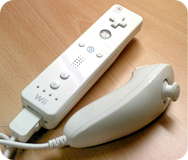
Video games are supposed to be fun. Any game’s primary purpose is to engage and entertain in ways that are new, exciting and challenging. Which is why early calls from critics and fan boys alike that the Nintendo Wii console was just a passing “fad” were out of their depth. The argument went that since the Wii didn’t have the horsepower, graphics or true HD support that the XBOX 360 or Playstation 3 had, it was doomed to failure.

In September of 2007, the Nintendo Wii surpassed sales of both its rivals and has never looked back. This year the Wii weathered its second holiday season with flying colors. According to VG Chartz the Wii sold an incredible 1.7 million units the week before Christmas. By comparison, Microsoft’s XBOX 360 sold 535,806 units and SONY’s struggling PlayStation 3 sold a mere 239,576. VG states that when December is done, Nintendo will have sold more than 3 million Wii’s for the month, an astounding number especially considering the current economy.

It is certainly true that most fads enter the market in a blaze of glory and then promptly burn themselves out. However, they also rarely have direct competition from similar products. Fans never had to consider “My Pet Log” when running out to the store to own their first “Pet Rock“. Fads are unique and unpredictable and by their very nature, a flash in the pan. From the very beginning, the Nintendo Wii was designed to be the very opposite of a fad.

From the Wii’s conception, Nintendo’s game designer Shigeru Miyamoto said the console was not about graphics or frame rates, but user interaction. He wanted to make a new way for players of all ages to interface with video games, and he succeeded. Unlike the XBOX or PS3, the Wii was the first video game platform that appealed to adults in large numbers. The Wii has become hugely successful in retirement homes where seniors play endless hours of Wii Bowling and even tone their aging muscles with Wii Fit. Hard core gamers can’t stand this aspect of the Wii. PS3 and XBOX fan boys argue that any console granny plays isn’t a “real” system, and is only geared for kids and old people. Somehow they say this with a straight face while SONY & Microsoft blatantly copy the parts of the Wii that people love like motion sensors and customizable player avatars.

Will the Nintendo Wii manage to stay off the competition for yet another Christmas? If I was a betting guy, my money would definitely be on Miyamoto and not Ballmer. That being said, eventually the Wii’s unique game play will lose its novelty and the console’s sales will slow. But rest assured, Nintendo has plans for the Wii’s successor that takes all the best parts and improves the rest. Nintendo didn’t become the giant of the video game world it is today by following others, Miyamoto and company had the vision to lead. They skillfully knew what the rest of the industry is only now figuring out – frame rates and flop cycles will only get you so far, but fun lasts forever.
3 Comments

Market Yourself An iParadigm

John Gruber over at Daring Fireball links to an intriguing piece by Paul Kafasis on the state of the App Store. The post compares Walmart’s strategy to sell disposable, cheap goods to those of App Store “ringtone” developers which are forcing down prices. My friend and business partner, Craig Hockenberry wrote about this very topic a few weeks ago in a piece that put him in the crosshairs of quite a few people.

After Craig’s piece was published, and indeed after reading the post by Kafasis, some are under the impression that more expensive “AAA” apps are doing just fine thank you very much. The theory goes that one only has to look at the App Store top 10 list to understand it’s not price that gets you into the top 10, but quality. This, plus marketing on the part of the developer are all that’s needed to boost your software into the top 10 of the App Store. Reading through the comment thread at Inside iPhone it all seems so simple. All a developer has to do is market their app and the rest will take care of itself! Why didn’t I think of that?

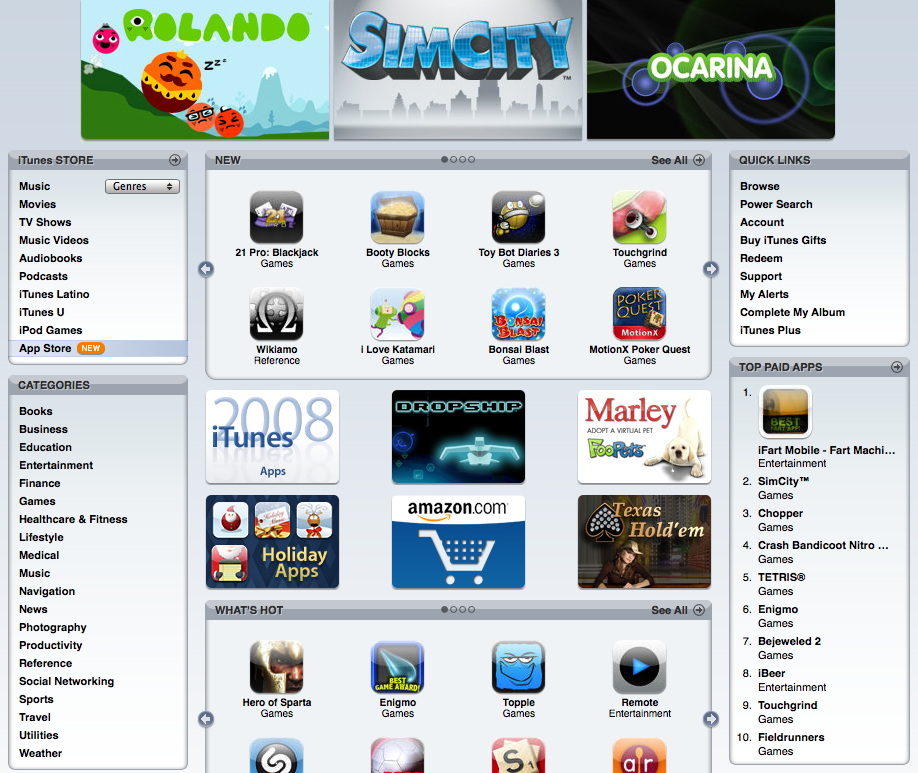
The part I love the most is that the people making the “just market your app!” comment have no real idea how much effective marketing costs. Oh sure, you can go far on viral and word-of-mouth marketing, but it all pales in comparison to even a small banner graphic in the App Store. The Iconfactory could spend tens of thousands of dollars buying up targeted advertising space to promote Frenzic, but it still wouldn’t be 1/10 as effective as the front page graphics that Dropship, Marley and Texas Hold’em are enjoying (for free) as I write this. Not only that, but I have no way to track metrics for advertising pointing at Frenzic in the App Store. I can’t gauge how effective a $75 blog ad versus a $2,600 DF sponsorship is because Apple doesn’t currently give me stats of people clicking through to my software. Anyone who says “Just market it!” doesn’t have a solid grasp on how the App Store works.

Another example is Rolando. People are holding this app up as the ultimate example of a quality, non ringtone app that is enjoying success in the store. It is true that Rolando is a fantastic game worthy of the top spot it once held. It is also true that Apple promoted Rolando from DAY ONE in the App Store with major graphics both in iTunes and on Apple.com. All that exposure helped to get Rolando into the top of the store when it launched. But its $9.99 price point is like an anchor. As I write this, Rolando sits at #30 in the top 100, and #10 in games. Let me repeat that. #10. In games.

So what is in the App Store top 10 right now? iFart Mobile is number one which is still riding high on a wave of PR thanks to being originally barred. Crash Bandicoot, which is featured in national Apple television spots is #2. Tetris, perhaps the most well-known video game in history, is #3. Three more ringtone apps come in as 4, 5 & 6 including the months old iBeer. Touchgrind, which also enjoyed prominent Apple billing, is #7. Bejeweled 2 is number 8, PocketGuitar ($.99) is #9 and SimCity rounds out the top 10. All of these apps either enjoyed uncommon press exposure, have a nationally known brand or are priced at $.99. Quality definitely plays a role in getting to the top, but price and “Apple love” play a larger part.

Does this all mean that developers like myself will abandon making quality iPhone applications like Twitterrific and Frenzic? Of course not. I just wish that people who think they know how the App Store works would admit that they really don’t. The App Store is still in flux and much is unknown. What I do know however is that there are key factors to getting to the top of the store, chief among them being price and exposure from Apple. No amount of 3rd party marketing, done on a small developer’s budget is going to change that simple fact. What’s worse (or better, depending on your point of view) is once you are in the top 10, even if you’re app is a “limited utility” ringtone app, because you’re in front of millions of eyeballs both on the device and in iTunes, you’re bound to stay there.

I don’t know exactly how to fix the App Store, but everyone I’ve spoken with agrees that it needs fixing. If not fixing, at least a change in how it favors certain apps while hindering others. The more we talk about this stuff, the better it will be for both developers and customers alike.

GOP Jerkwads

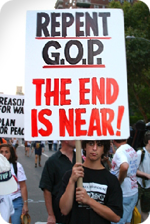
You’d think that after the pasting they received in November, the GOP would be busy figuring out why they are so out of touch with the American people. Of course, you’d be wrong. Apparently Republicans are interested in alienating even more of the country as they insist on playing to the hard base.
Witness the arrogant and bigoted tone of one RNC Chair candidate, Chip Saltsman. Saltsman sent out copies of a song entitled “Barack the Magic Negro” as part of his Christmas greeting. The song, originally publicized by Rush Limbaugh earlier this year, came under fire from the media and anyone with a brain for its racist overtones. Somehow Saltsman saw fit to make the tune part of his holiday message. All this with less than 30 day to go until the inauguration of Barack Obama as the 44th President of the United States. To top it off, in the 20+ hours since this story first broke, only one high-ranking Republican has condemned Saltsman’s actions. Just one.

If the GOP has any hope of regaining the respect it lost over the past eight years, they must begin by pulling their heads out of their collective asses. It’s bad enough making a joke by calling someone a “magic negro”, but when that person is the next President of the United States and you actually defend said remarks, you deserve huge helpings of ridicule and scorn.

Sadly, this is yet more evidence that the right has no interest in doing what’s best for the country. Until this dipstick stunt, the prime example of the GOP’s pandering attitude was McCain pulling Palin out of obscurity as his running mate. Saltsman’s actions flow from the natural progression of this costly strategy and I for one hope they keep it up. Their foolish bravado is laying the foundation for a long-term Democratic majority the right hasn’t seen in decades. Saltsman says his song was “just a joke”, but the really funny part is the joke’s on him.

UPDATE: Peter Yarrow, one of the artists behind “Puff the Magic Dragon”, speaks out on the whole affair and hits the nail right on the head. He writes “Obama is not a candidate. He is the President-Elect, and this song insults the office of the Presidency, the people who voted for him, as well as those who did not — and taking a children’s song and twisting it in such vulgar, mean-spirited way, is a slur to our entire country and our common agreement to move beyond racism.”

UPDATE II: Simon Rosenberg, head of the Democratic organization NDN, is quoted in a recent Huffington Post piece as saying the GOP just don’t get it. “The core play in the GOP playbook for 44 years has been the magic negro playbook, whether it is Willie Horton, or welfare queens and tax and spend, or the way they have dealt with immigration… they don’t have a play in their playbook that doesn’t start with the exploitation of racial divisions. They are going to have to reject 44 years of GOP politics in order to have any chance in the 21st century America.”

1 Comment

Carol of the ‘Logs

What happens when Christmas and capitalism get together? You get an idea from 2 weeks worth of Christmas Catalogs that were sent to my house from late November to early December. I didn’t request any of these things, they just showed up in our mailbox. Before you ask, yes, they were recycled. Merry Christmas everyone!

For the Geek Who Has Everything

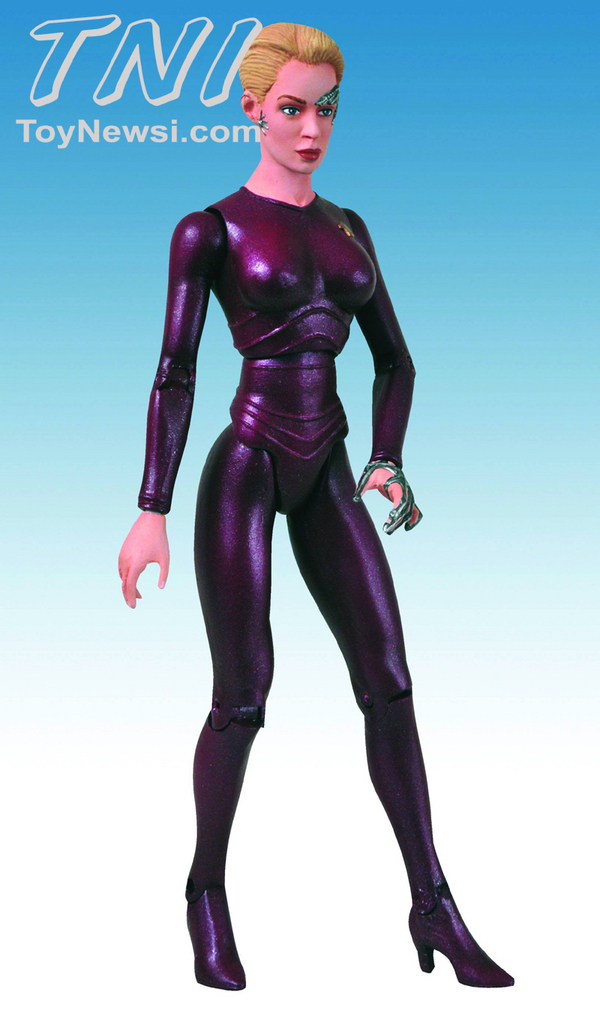
While I was surfing around looking for some last minute Christmas presents, I came across a little piece of Star Trek heaven. This new Seven of Nine 7″ figure, sculpted by Rudy Garcia is just one in a set but it’s a pretty good likeness and who wouldn’t want a little Seven on their desk? The clincher however is the incredible marketing text that accompanies the item:

“Seven of Nine’s grimly pallid countenance is moderately contradicted by the voluptuousness with which she occupies her form-fitting sculptured chassis.”

Sold and sold! I think “form-fitting sculptured chassis” is the most elaborate way I’ve ever heard someone say “nice rack!”. If you have a Trek fan on your Christmas list, this might be just the thing the holographic doctor ordered. Then again at this late stage in the game you’ll probably need a temporal anomaly to get it to your doorstep on time. Oh well, there’s always next year!

3 Comments

Switching Hats

Back on December 1st, I put on my artist’s hat and wrote a post about the importance of icon design and how it shouldn’t be taken for granted or seen as an afterthought. The post garnered a fair amount of exposure and I received a great deal of positive feedback from designers and developers alike on the importance of icon branding and standing out in the App Store.

Near the end of the piece, I offered up this unassuming little opinion which has caused me a fair amount of stress these last few days:

“Lately, developers have taken to plastering “SALE” or “60% OFF!” within their icons. They’ve become lazy and let the iPhone software mar their design with glossy highlights which obscure efforts to brand their software. Fight the urge to cheapen your brand and instead give your icons the love and attention they deserve. You’ll still sell boat loads of copies and your users just might end up thanking you at the same time.”

What is the source of my distress? Over the course of the past week, the Iconfactory and ARTIS Software jointly agreed to put our game Frenzic on sale for the Christmas holiday. From the moment we launched the product, we had always planned on temporarily lowering the price for the holiday rush. When I wrote the original post I was unaware of the importance the app’s icon plays in marketing an online sale. I’m guessing you can probably see where this is heading. As the app went on sale today, it reluctantly sported a new badge. The same type of badge that I railed against in my original post.

If you care as much about icons and design as I do, then you’re probably asking yourself how I could allow something like this to happen. At first I couldn’t figure it out myself, and then it became very simple. I took off my “designer hat” and put on my other one… the one that says “business owner”.

The business owner in me doesn’t wrestle with many of the lofty ideals that my inner designer aspires to. Being a partner in a successful company sometimes means doing what’s best for the health and growth of the business, especially in today’s unsure economy. It’s easy to criticize someone’s design decisions when you’re on the outside looking in. You think you’ve got everything figured out, but then your app starts to sink off the App Store and suddenly nothing’s as simple as you thought.

Although I initially resisted calls to slap a “For sale” badge on our icon, I came to realize that it was one of the most important ways to get people who had previously dismissed Frenzic due to its $4.99 price tag to take another look. The change may not affect sales at all, but on the other hand, it may help to get Frenzic in front of more people’s eyes than ever before. If that means that I have to eat a hefty helping of crow in order for us to maximize our exposure in the App Store, then I say pass the ketchup.

4 Comments

My Scrooge

Ask any person what’s their favorite adaptation of A Christmas Carol, and you never know what they’ll say. There have been so many versions of the classic tale over the years, it’s daunting to pick a single version. I suspect that for most people, their favorite is the one they were introduced to as a child.

Without a doubt, my favorite version of Charles Dickens’ A Christmas Carol is the 1970 musical adaptation, Scrooge starring Albert Finney, Kenneth More and Alec Guinness. Produced by the same team that gave the world Oliver!, Scrooge is perhaps the liveliest version of the story I’ve ever known, and for my money the most satisfying. It features a memorable array of songs, strong acting and a large, energetic cast that gives the film the feeling of a broadway production.

Although the film never won any Oscars, Albert Finney did win a Golden Globe in 1971 for Best Actor in a musical or comedy. Finney is the heart and soul of Scrooge and manages to make us both despise and love the character simultaneously. From our glimpses into his past as an abandoned boy, to the heartbreaking loss of his finance Isabel Fezziwig, Finney’s Scrooge is a real person, with a host of dreams squandered in the pursuit of wealth.

When Scrooge’s transformation finally arrives at the end of the second act, it’s made all the more believable thanks to Finney’s incredible depth as an actor. As Ebenezer awakens at the foot of his bed to learn he has been given a second chance, Finney performs the moving “I’ll Begin Again” and makes us actually believe he has changed for the better.

Too many adaptations spend hardly any time after Scrooge turns from the dark side. I enjoyed the George C. Scott version of A Christmas Carol, but the end is very short and just doesn’t give you that “It’s a Wonderful Life” feeling that the end of Scrooge does. All this, combined with some of the most beloved holiday songs from composer Leslie Bricusse, add up to one of my all-time Christmas favorites. Since the soundtrack has never been released on anything other than vinyl, I’ve spent the last few Christmases making my own by digitizing and editing the audio from the DVD release. If you’re interested in getting a copy of it, drop me a line and let me know. I’ll be happy to share my efforts with you.

What version of A Christmas Carol is your favorite? Patrick Stewart’s performance? Bill Murray in Scrooged? Don’t forget Mr. Magoo’s Christmas Carol! Don’t be a humbug, drop a note in the comments and share your memories with the rest of us. Merry Christmas everyone!

3 Comments

Bare Bones Trek: TOS

After my recent Ode to an Outpost piece about Deep Space Nine, I had several readers tweet me asking for an “essentials” guide to the series. Basically it would be all the episodes of the DS9 that I would recommend to a newbie so they could become familiar with the show, watch very best parts and leave the questionable bits behind.

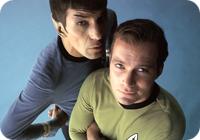
I actually think this is a great idea, kind of like the iTunes essentials playlists that Apple puts together for a particular genre of music. Given the fact that my friend Louie is attempting to familarize himself with Star Trek before the big movie hits next spring, I thought it best to start with Star Trek: The Original Series. If things go well, I’ll write similar guides for other Trek series, including DS9.

What follows are my bare bones suggestions for anyone who has never watched the Original Series. They are the absolute minimum a Trek newbie should watch to get a sense for the show and its characters. Of course, as with anything, your milage may vary so let me know if you found this post helpful. Thanks!

Season One

Balance of Terror

Although the episode is a bit clunky due to the fact that it’s one of the earliest scripts, it’s a must watch for any Trek newbie. The story introduces the Romulans to the Star Trek universe and defines their place in future stories. It also highlights Leonard Nimoy’s early emotional portrayal as Spock, something that quickly changes.

Space Seed

One of the best episodes of the entire series, it lays out the foundation for the second Star Trek film, The Wrath of Kahn. Filled with great drama and even a few action scenes thrown in for good measure, Space Seed helps define the history of Star Trek’s future.

Devil in the Dark

A classic haunted house tale that is the first time Kirk and Spock start to develop the friendship that carries them through the next 40 years. The episode is filled with mystery and suspense and features some nice interplay between Nimoy and Shatner. Devil in the Dark is also the first time McCoy utters his famous tag line “I’m a doctor not a…” in this case, “bricklayer”. Classic!

City on the Edge of Forever

Regarded by many Star Trek fans to be the very best episode of the Original Series, City on the Edge of Forever is a powerful love story that gives Shatner the rare chance to under-act. It also strengthens the bond between Kirk & Spock, while serving as a wonderful example of how to write an effective time travel story. Definitely a must see.

Season Two

Amok Time

Amok Time gives us a small glimpse into the history of Spock’s home planet, its culture and more. The story revolves around the “big three” – Kirk, Spock & McCoy and features a number of great scenes between the lead actors. Aspects of Vulcan revealed in Amok Time pop up in numerous places throughout all of Star Trek.

The Doomsday Machine

Not a whole lot of character development here, but that’s okay. The Doomsday Machine is one of my all-time favorite episodes and is basically an action/suspense story in space. The writers cleverly put Spock & McCoy in the middle of the action, and at each other’s throats which always makes for the best episodes.

Journey to Babel

If any new fan is looking to understand the character of Spock as portrayed by Leonard Nimoy and created by Gene Roddenberry, then Journey to Babel is your best guide. The story introduces his human mother, Amanda, and his Vulcan father, Sarek as murder breaks out aboard the Starship Enterprise. The episode features terrific character development and gives fans an understanding of the future events of The Next Generation as well as Star Trek III, IV & V.

The Trouble with Tribbles

Although this episode doesn’t contain the strongest story, or the best acting, it is a rare funny episode of Star Trek. This, plus the fact that if you get asked about Tribbles by a Star Trek fan, and you’re not familiar with them, you’re libel to get some nasty looks. It is also necessary viewing for appreciating the brilliant Deep Space Nine episode Trials and Tribulations. Trust me on this one.

The Ultimate Computer

Many episodes of Star Trek toss out the name “Daystrom” in reference to the character portrayed by William Marshall from The Ultimate Computer. Daystrom is the Star Trek equivalent of Albert Einstein, and the story showcased here reveals where the character originated. It also serves as a wonderful example of how Kirk’s love of the Enterprise effects his decision making, here and in the movies.


Season Three

Requiem for Methuselah

One of the best episodes from the third season, Requiem once again gives the big three the chance to develop their character’s relationships as they attempt to solve the eternal riddle of the mysterious Mr. Flint. The final scene in this episode serves as a sign post to understanding Spock’s ongoing relationship with Kirk, both as First Officer to Captain as well as one friend to another.

2 Comments

Time Keeps On Slippin’

Inspired by a recent tweet from my friend Craig, I’ve sat down and thought about the various forms of media / technology transitions that I’ve personally taken part in. This list is amplified by the fact that my 39th birthday is coming up and for some reason, I’m keenly aware of my age.

How many of these evolutions have you experienced? Do you have others you could add to the list? If so, I encourage you to post them in the comments section. Are these changes painful reminders or fond remembrances? You’ll have to decide that for yourself.

• • •

vinyl > 8-track > cassette > CD > MP3

Walkie talkies > rotary > touch tone > cordless > cell

Finger paint > crayon > Lite-Brite > Etch-A-Sketch > Magna Doodle > WACOM

8″ floppy > 5 1/4″ > 3 1/2″ > SyQuest > Bernoulli > ZIP > removable

Apple IIe > IIgs > IIvx > Performa 6400 > Powermac G3 > PM G4> Dual PPC G5

Mattel Football > Merlin > Quiz Wiz > Game Boy > Nintendo DS > iPhone

Laserdisc > VHS > DVD > Blu-ray > Bit Torrent

Coca-Cola > “New” Coke > Coca-Cola Classic > Coke 2 > Coca-Cola Classic > Coke Zero > Coca-Cola Classic

Rubylith > Letraset > Pagemaker > QuarkXPress > InDesign

Adventure > Ultima > Bard’s Tale > Moria > Diablo II > World of Warcraft

Dewey Decimal > microfiche > Encyclopedia Britannica > Wikipedia

Odyssey > Atari 2600 > Intellivision > Nintendo ES > SEGA Genesis > Super Nintendo > Playstation > N64 > Game Cube > Wii

serial > SCSI > USB > Firewire > USB2 > WiFi

Play-Doh > Tinkertoys > Lincoln Logs > Erector Set > LEGOS

1 Comment

The Vatican Goes Green

In a wonderful example of leading by example, the Catholic Church this past week took its first steps into the foray of “green power” with the activation of a new solar energy system. The massive grid of 2,400 photovoltaic panels sits atop the Vatican’s “Nervi Hall,” where the Pope holds general audience and concerts are performed. The system will save 80 tons of oil per year, or 225 tons of CO2.

The efforts to advance renewable energy sources for the Catholic church have been lead by none other than Pope Benedict XVI himself, who has long stated his church’s commitment to the environment. It’s a remarkable example of an ancient institution taking a progressive stance to attack a problem head on, and I applaud the effort whole-heartedly. In addition, since the summer of 2007, the Vatican has also been involved with an eco-restoration company to restore an ancient forest in Hungary, and more projects are in the works.

By far, the most hopeful part of the Vatican’s efforts have been its willingness to spread the word about climate change. The Vatican has hosted a scientific conference to discuss the ramifications of global warming, blamed on human use of fossil fuels. If a conservative organization such as the Catholic Church can spearhead protection and education of the environment, then perhaps the right can take its first steps to realizing that climate change isn’t a liberal or a progressive issue. It effects us all and we need to start dealing with it. Thankfully, the Vatican, led by Pope Benedict XVI, realized this a long time ago. Now it’s time for other conservatives to catch up.

27 Comments

Why Icons Matter

I can’t tell you how many times in the course of my career as an icon artist that a client considered their icons to be an after thought. After spending hundreds of man hours and pouring thousands of dollars into software development, some clients just refuse to devote the attention needed to the glyphs that act as both button and branding. At the Iconfactory, we try and educate clients about the importance of icons and how they strengthen a company’s brand as well as communicate a product’s core concepts quickly and easily. It may sound like marketing fluff, but years of experience have taught me it’s the truth.

So when it comes to designing our icons for our own software products, we almost always end up obsessing over them. The redesign of the application icon for xScope went through nearly 20 different revisions before we settled on a final version. This time around, the drama was caused by the new icon for Frenzic for the iPhone.

Standing Out From The Crowd

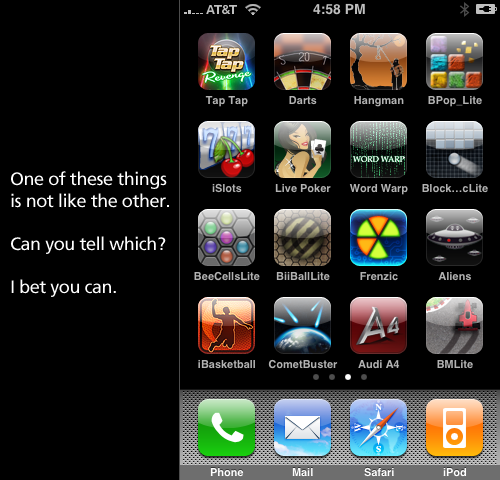
When it came time to design the icon for Mobile Frenzic, we knew we wanted to use a 2D translation of the OS X version from the desktop. However, unlike Mac desktop icons which have a canvas size of 512×512 pixels, iPhone and iPod touch app icons are limited to 57×57 and look best when designed straight on. At first we decided to translate Frenzic.com’s fav icon which was a pie of green and orange wedges on a glossy black base. Early beta versions of Mobile Frenzic used this icon, but there was a problem. It just wasn’t eye catching.

Our artist, David Lanham, went back and added a neon-like inner glow that gave the impression of the icon being lit from within, like it was a piece of plexiglass. The results were effective and with the addition of a high-tech circuit board motif, I knew we had a winner. The icon both stood out on the iPhone’s home screen and did a wonderful job of branding “Frenzic” on the device. Despite these successes, there were those among us that thought it stood out a little too much.

As artists, we often get butterflies the first time we show a client our designs. In this case, the “client” was Frenzic creator and lead programmer, Wolfgang Ante. We’ve had a close working relationship with Wolfgang for years and even though he almost always loves everything we do “out of the box”, he was hesitant about the icon’s treatment. Both he, and our own lead programmer, Craig Hockenberry played devil’s advocate and thought that the glowing, high-tech icon might be too dissimilar to be effective. The design didn’t seem to follow conventional wisdom for iPhone app icons and we debated the pros and cons of the design.

In Expertise We Trust

The great thing about working at the Iconfactory is that we play to each other’s strengths. While I may have ideas about how a particular software feature might work, I trust in the skill and expertise of Craig and Wolfgang to pull off the actual programming. I often put my faith in their hands when it comes to coding, and likewise, they do the same for us when it comes to design. This is more than I can say for many of our clients who think they know best when it comes to icon design. Despite a client’s lack of experience of how icons communicate, where they are seen, or the technical details needed to pull them off, I often get lectured on how they should be rendered or what form they should take.

So, in their wisdom, Wolfgang and Craig set their hesitations aside and let the designers do their job. The result was a unique and compelling application icon that was simple to understand, easy to spot and visually unique from all other iPhone application icons. Maybe its even helped sell a few extra copies at the same time.

All too often icons are treated as second-class citizens, especially in the App Store. Lately, developers have taken to plastering “SALE” or “60% OFF!” within their icons. They’ve become lazy and let the iPhone software mar their design with glossy highlights which obscure efforts to brand their software. They use dull colors or pile on heaps of detail that just adds unwanted noise to an already cluttered array of choices. After the flashy ad pitches have faded, the icon still has to live on the user’s device and is often the first line of interaction with the product. Fight the urge to cheapen your brand and instead give your icons the love and attention they deserve. You’ll still sell boat loads of copies and your users just might end up thanking you at the same time.